
What Fish Can You Catch on a Quepos Fishing Charter?
Quepos is one of Costa Rica’s most popular destinations for sport fishing, and one of the biggest reasons anglers visit is the incredible variety of fish found along the Central Pacific coast. Depending on the season, ocean conditions, and type of fishing trip, you can encounter everything from powerful sailfish and marlin offshore to hard-fighting roosterfish, snapper, and jack crevalle closer to shore.
One of the advantages of booking Quepos fishing charters is that you can choose between different types of fishing experiences. Offshore trips take anglers into deeper Pacific waters in search of big-game species, while inshore trips concentrate on rocky coastlines, reefs, islands, and other productive areas closer to land.
If you are planning a fishing trip and wondering what you might catch, this guide explains some of the most popular species targeted on Quepos fishing charters Costa Rica, including what makes each fish special and whether it is primarily associated with offshore or inshore fishing.
Why Is Fishing in Quepos So Diverse?
Quepos sits along Costa Rica’s Central Pacific coast, giving anglers access to both productive coastal waters and deeper offshore fishing grounds. This creates opportunities to target very different species during the same vacation.
The type of fish you encounter depends on several factors, including:
- Time of year
- Ocean conditions
- Water temperature
- Baitfish activity
- Tides
- Fishing location
- Fishing technique
- Length of your charter
Offshore trips commonly target sailfish, marlin, yellowfin tuna, mahi-mahi, and wahoo, while inshore fishing can produce roosterfish, snapper, snook, jack crevalle, mackerel, and other coastal species.
This variety is one reason anglers can have very different experiences on two fishing trips departing from the same marina.
For many visitors, sailfish is the fish they most want to catch when booking a Quepos fishing charter.
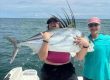
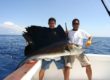
Pacific sailfish are famous for their speed, powerful runs, and spectacular jumps. They are easily recognized by their large dorsal fin, known as a sail, which can spread dramatically when the fish is excited.
Sailfish are primarily an offshore target, meaning anglers generally travel farther from the coast to search for them.
Quepos is particularly well known for billfish fishing, with sailfish activity often strongest during the drier months. Several current fishing guides identify December through April as an important period for sailfish, although encounters can occur outside that window as well.
A sailfish encounter can happen quickly. The crew may be trolling multiple lines behind the boat when a fish suddenly appears in the spread. Watching a sailfish attack the bait and then leap across the surface is one of the memorable moments of a Costa Rica fishing trip.
Sailfish are generally handled as catch-and-release fish, allowing anglers to enjoy the fight without keeping the fish.
Blue Marlin
If your goal is to catch a truly powerful offshore fish, blue marlin belongs high on your list.
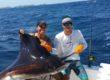
Blue marlin are among the largest game fish encountered by anglers in the Pacific. They are powerful, fast, and capable of putting serious pressure on fishing equipment.
Blue marlin are an offshore species, so anglers interested in targeting them will generally want a longer trip that provides the captain with enough time to reach productive offshore waters.
Marlin activity varies throughout the year. Current Quepos fishing information shows opportunities for blue marlin across multiple seasons, with some periods producing stronger activity than others.
Because marlin can be encountered far offshore, a full-day trip is often the practical choice for anglers specifically interested in pursuing these trophy fish.
A marlin hookup can also turn into a long battle. The fish may make powerful runs, jump, dive, and change direction repeatedly, making it an exciting challenge even for experienced anglers.
Black Marlin
Blue marlin often receive more attention, but black marlin are another impressive species that can be encountered in Quepos offshore waters.
Black marlin are extremely powerful fish and are considered a prized catch among serious sport fishermen.
They are not necessarily encountered as frequently as some of the other offshore species, so catching one can be a particularly memorable experience.
If black marlin is one of your primary targets, tell your captain before the trip. Fishing strategy can change depending on the species you want to pursue, the season, and current ocean conditions.
The important thing to remember is that fishing is never guaranteed. Even when conditions are favorable, wild fish move constantly, and every day on the water can be different.
Yellowfin tuna are another popular target on Quepos offshore fishing charters.
Unlike billfish, tuna are often pursued for both the fight and the opportunity to bring quality fish back for the table, subject to applicable regulations and the charter’s practices.
Yellowfin tuna are powerful swimmers. Even a fish that does not look enormous can provide an impressive battle once it starts pulling away from the boat.
Tuna can be found offshore throughout much of the year, with several local fishing sources identifying stronger activity during parts of the May-November period.
One exciting part of tuna fishing is that the captain and crew may search for signs of feeding activity, birds, baitfish, current changes, or other indicators that tuna are nearby.
When a school is actively feeding, the action can become intense very quickly.
For travelers who want a combination of exciting fishing and the possibility of fresh fish for dinner, yellowfin tuna is an attractive target.
Mahi-Mahi
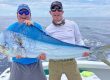
Mahi-mahi, also called dorado, are among the most colorful fish you can encounter on Quepos fishing charters Costa Rica.
Their bright blue, green, and yellow coloring makes them particularly impressive when they first come out of the water. They are also fast and aggressive, which can make them exciting for anglers of different experience levels.
Mahi-mahi are generally an offshore target. They are often associated with floating debris, weed lines, current changes, and other areas where baitfish may gather.
Several Quepos fishing sources identify mahi-mahi as an important offshore species, with strong opportunities during portions of the green season.
Another advantage is that mahi-mahi can provide plenty of action when a school is located.
For families or groups with anglers of different experience levels, mahi-mahi can be particularly exciting because the fish are visually impressive and fight hard without necessarily requiring the same specialized pursuit as a trophy marlin.
Wahoo
Wahoo are fast, aggressive predators and another potential target on Quepos offshore fishing trips.
They are known for their speed and sharp teeth and are prized by many anglers for both their fighting ability and quality meat.
Wahoo are generally considered an offshore species and can be encountered around productive structure and areas where baitfish are present.
They may not be the primary target on every trip, but they can provide an exciting bonus when conditions line up.
If you are interested in catching wahoo, mention it when booking your Quepos fishing charter. Your captain can explain what species are currently active and whether your trip can be planned around them.
Roosterfish
Not every great fishing experience in Quepos requires traveling far offshore.
For anglers who prefer fishing closer to the coastline, roosterfish are one of the most exciting species to target.
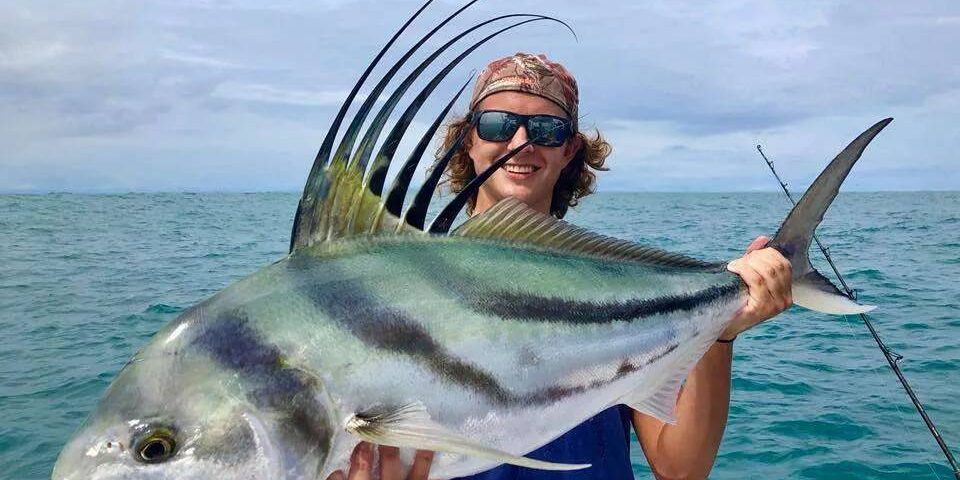
Roosterfish are instantly recognizable because of their distinctive dorsal fin. They are strong, aggressive fish that can produce spectacular strikes and powerful runs.
They are a signature species for Quepos inshore fishing charters and can be found around rocky shorelines, points, reefs, beaches, islands, and areas where baitfish gather.
Roosterfish are especially popular with anglers who enjoy casting or live-bait fishing.
One of the advantages of an inshore trip is that you generally spend less time traveling to the fishing grounds. That can mean more time actively fishing, depending on the location and conditions.
Roosterfish are also an excellent option for travelers who want a shorter fishing trip rather than spending a full day offshore.
Cubera Snapper
Cubera snapper are another impressive inshore target around Quepos.
These powerful fish often hold around rocky structure, reefs, and other areas that provide cover.
Snapper fishing can be challenging because the fish may immediately try to return to structure after taking the bait. This means anglers need to be prepared for a strong initial run.
For anglers interested in inshore fishing, snapper can provide a completely different experience from chasing sailfish or marlin offshore.
Rather than trolling across open blue water, the captain may work specific pieces of structure where predatory fish are likely to be holding.
Jack Crevalle
Jack crevalle are another hard-fighting coastal species found around Quepos.
They are not necessarily the largest fish in the ocean, but their strength makes them popular with anglers who enjoy active inshore fishing.
Jack crevalle can hit aggressively and make powerful runs, making lighter tackle particularly exciting.
They are commonly associated with inshore fishing around rocky points, coastal structure, and other areas where baitfish are present.
If your goal is to keep the rod bending rather than specifically chase a trophy species, an inshore trip can provide plenty of excitement.
Snook
Snook are another potential inshore catch around Quepos.
They are often associated with coastal environments, river mouths, estuaries, and areas where saltwater and freshwater environments meet.
Snook can be an especially interesting target for anglers who enjoy more technical inshore fishing.
Their behavior can vary according to tides, water conditions, bait movement, and location. Because of this, your captain’s local knowledge can be particularly valuable when targeting them.
Spanish Mackerel
Spanish mackerel are another fast and aggressive fish that may appear on a Quepos inshore fishing trip.
Their speed makes them fun to target, particularly when baitfish are active.
Mackerel can also be a useful indicator that predators are feeding in an area. When baitfish are concentrated near the surface, several predatory species may move into the same zone.
This is one of the reasons a fishing charter can be more exciting than simply traveling to a predetermined location. Captains can adjust the plan according to what they see happening on the water.
Amberjack and Other Coastal Species
Depending on the location, season, and conditions, anglers may also encounter amberjack, grouper, African pompano, corvina, needlefish, rainbow runner, and other coastal species.
The exact list should never be treated as a guarantee.
Fish are wild animals, and their movements change constantly. A species that was active yesterday may not be in the same area tomorrow.
Current Quepos fishing sources list a wide variety of additional inshore species beyond the most famous roosterfish and snapper.
That variety is part of what makes fishing in the Quepos area interesting.
Offshore vs. Inshore: What Can You Catch?
If you are trying to decide between Quepos offshore fishing charters and Quepos inshore fishing charters, your preferred fish is one of the most important factors to consider.
Offshore fishing commonly targets:
- Sailfish
- Blue marlin
- Black marlin
- Yellowfin tuna
- Mahi-mahi
- Wahoo
Offshore trips generally involve longer travel times and are particularly suited to anglers looking for big-game species.
Inshore fishing commonly targets:
- Roosterfish
- Cubera snapper
- Snook
- Jack crevalle
- Spanish mackerel
- Grouper
- Amberjack
- Other coastal species
Inshore trips stay closer to the coast and can be a good option for families, first-time anglers, or travelers who prefer a shorter day on the water.
What Is the Best Fish to Catch in Quepos?
There is no single fish that every angler should target.
The best target depends on what you want from your fishing trip.
If you want an offshore trophy experience, you may be interested in sailfish or marlin.
If you want a powerful fish that can potentially provide table fare, yellowfin tuna may be high on your list.
If you want colorful fish and exciting action, mahi-mahi can be a great target.
If you prefer fishing closer to land, roosterfish, snapper, jack crevalle, and snook offer plenty of possibilities.
Your travel dates also matter. Fish populations and activity change throughout the year, so discussing your goals with your captain before departure is one of the best ways to plan the trip.
Does the Season Affect What You Catch?
Yes.
Quepos offers fishing opportunities throughout the year, but different species can become more prominent during different periods.
For example, current local fishing information identifies December through April as an important period for sailfish, while tuna and mahi-mahi can be particularly relevant during other portions of the year.
However, seasonal information should be viewed as a guide rather than a guarantee.
Ocean temperature, currents, baitfish, weather, tides, and other environmental factors can influence where fish are located on any particular day.
That is why experienced local captains are valuable. Instead of following a calendar blindly, they can adapt the trip to current conditions.
How to Choose the Right Quepos Fishing Charter
Before booking, think about three questions.
First, what fish do you want to catch?
If you are dreaming about sailfish or marlin, you will probably want to consider an offshore trip.
If roosterfish or snapper sounds more exciting, an inshore trip may make more sense.
Second, how much time do you have?
Offshore trips generally require more time because the boat needs to travel farther from shore.
If you only have half a day available, inshore fishing can give you more time actively fishing.
Third, who is coming with you?
Experienced anglers may want to spend an entire day offshore pursuing large game fish. Families or first-time anglers may prefer the shorter travel time and different pace of an inshore trip.
There is no universal answer. The right choice depends on the experience your group wants.
Book Your Quepos Fishing Adventure
From acrobatic sailfish and powerful marlin to colorful mahi-mahi, hard-fighting tuna, and aggressive roosterfish, the variety of fish around Quepos is one of the biggest reasons anglers return to Costa Rica’s Central Pacific coast.
Quepos fishing charters give you access to two very different fishing environments. Offshore waters offer opportunities for billfish and pelagic species, while the coastline provides exciting inshore fishing for roosterfish, snapper, jack crevalle, snook, and other coastal species.
Before choosing a trip, consider your preferred fish, travel dates, available time, and whether you want to fish offshore or closer to the coast. Then talk with your captain about current conditions and your target species.
Whether your goal is to release a sailfish, battle a yellowfin tuna, cast for roosterfish, or simply spend a memorable day on the Pacific, Quepos offers a wide variety of fishing opportunities for both experienced anglers and first-time visitors.